Digital experience analytics for e-commerce teams

Air360 Team on

The average e-commerce site converts at around 2%. That means 98 out of every 100 visitors leave without buying.
You probably know your conversion rate. You might even know your cart abandonment rate (it sits around 70% across the industry). What most teams still can’t answer is why.
That single question is where most e-commerce analytics setups fall short. And in 2026, with AI changing what’s possible for lean teams, there’s no good reason to still be working without a real answer.
What is digital experience analytics?
Digital experience analytics is a category of tools that goes beyond traffic data to show what users actually do on your website. Where traditional analytics counts visits and clicks, digital experience analytics captures behavior: how far users scroll, which page elements they engage with, where they hesitate in a checkout flow, and at which step they leave.
It covers the full picture of the on-site experience: funnels, user journeys, page-level engagement, and behavioral patterns across devices and segments. The goal isn’t more data. It’s understanding what’s blocking your users from converting, without needing to build custom tracking infrastructure to find out.
Here’s why it matters specifically for e-commerce.
What traditional analytics can’t tell you
Google Analytics is a traffic tool. It was built to answer “how many people visited this page?”, not “what did they do once they got there?”
For e-commerce teams, that distinction matters more than most realize. When 70% of shoppers abandon their carts, you need to know if the issue is the shipping cost reveal, a confusing coupon field, or a payment option that’s missing. GA gives you the abandonment rate. It doesn’t show you the moment users gave up.
Getting that level of detail traditionally meant setting up event tracking: a long list of custom tags your dev team would need to build and maintain. Which creates the second problem: roughly 65% of mid-market e-commerce brands don’t have a dedicated data engineer. Marketers and product managers end up trying to get answers from tools that were built for analysts.
The result is dashboards nobody fully trusts, questions that take weeks to answer, and optimization work that stalls because the right data never reaches the people who need it.
What digital experience analytics actually does
Digital experience analytics is built around one question: what are users actually doing on your site?
Not just where they clicked, but where they paused, what they scrolled past, and which elements they interacted with before dropping off. It’s the layer of understanding that sits between your traffic data and your revenue.
For e-commerce specifically, this means:
Funnel analysis in a few clicks. Traditional analytics requires you to define every funnel step manually and tag each one. With Air360, you can build a funnel in a few clicks and see drop-off by step, by device, by segment. No tagging, no engineering ticket. And once you have the funnel, AI generates a plain-language summary of what’s happening so you don’t have to interpret the chart yourself.
Page analysis on demand. Running a campaign and want to know how users are behaving on that landing page? Just point Air360 at the page. It does the digging: scroll depth, element engagement, where attention is concentrated, what users are ignoring. You get the answers without building a report from scratch.
Zoning analysis on your product and category pages. Which images are users actually engaging with? Which CTAs are being ignored? Zoning shows you how attention is distributed across a page so you know what to test and what to fix.
User journey mapping that shows the real path. You don’t just want to know that users left. You want to know where they went before they left. Journey analysis surfaces the actual navigation patterns, including the unexpected ones.
Why Air360’s AI-powered analytics is powerful for lean teams
Here’s the shift that matters most for teams without dedicated analysts: AI can now do the interpretation work.
Looking at a funnel chart and knowing what it means requires experience. You need to know what a normal drop-off rate looks like at the product page versus checkout, spot anomalies, cross-reference segments, and build a hypothesis. Most marketing and product teams don’t have the bandwidth for that, even when they have the data.
Air360 generates plain-language summaries of what’s happening in your analytics. Instead of a dashboard full of numbers, you get a written explanation: which step in your funnel is underperforming, which device segment is driving the gap, what changed since last week.
It’s AI as a genuine shortcut to answers, the kind that used to require a data analyst to surface. And it matters a lot when your team is three people trying to improve a 2% conversion rate before the next peak season.
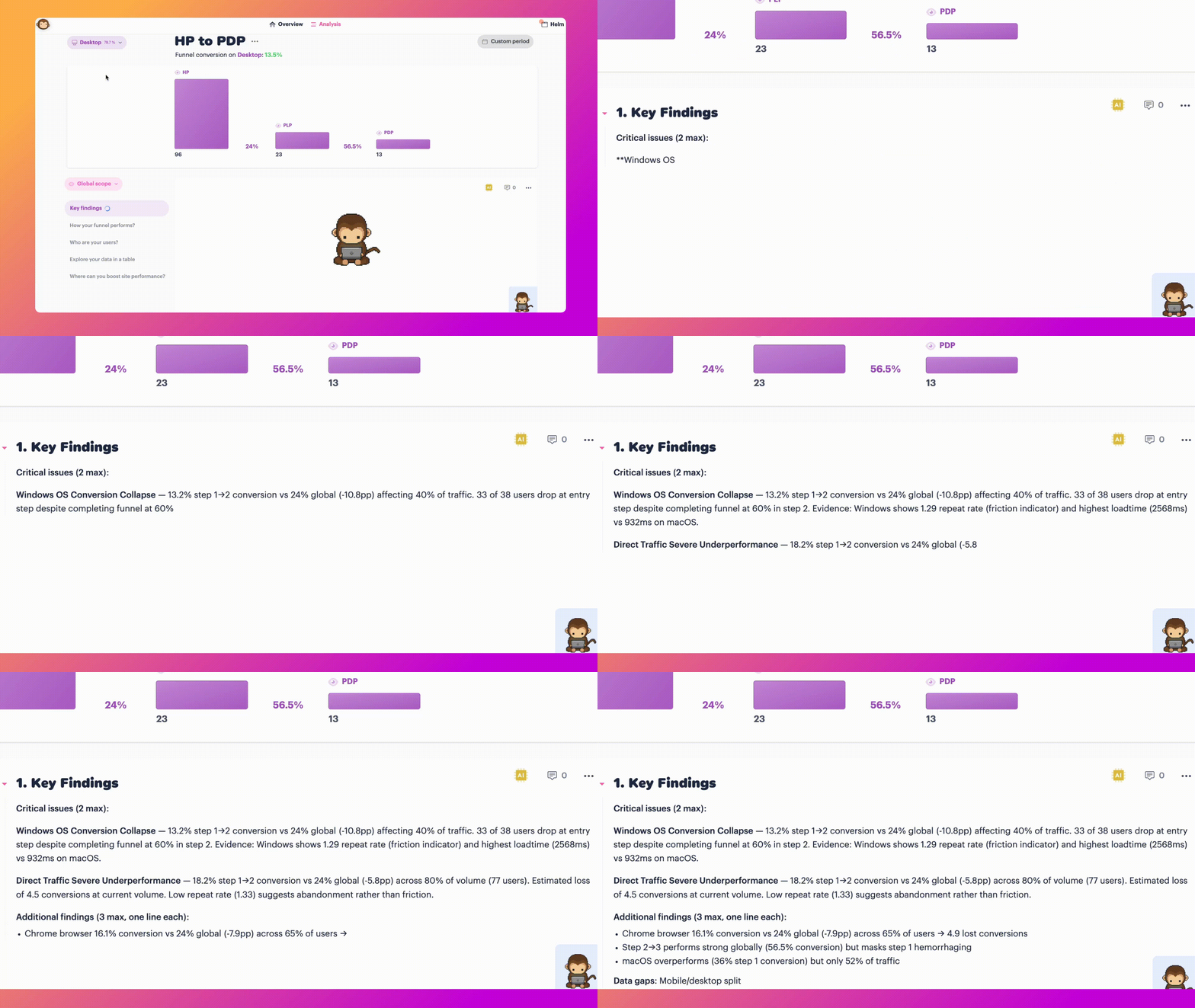
Here’s what funnel analysis looks like inside Air360: built in a few clicks, with drop-off data by step and an AI summary that tells you exactly where users are leaving and why.
What to look for when evaluating tools
If you’re looking for a digital experience analytics platform for your e-commerce team, a few things separate tools that actually work from tools that add to your data pile:
No tagging required. If setup involves a long list of events to configure, you’ll need engineering resources to get value. Look for platforms that work right away.
Fast funnel setup with AI summaries. You shouldn’t need a data engineer to build a funnel report. A good platform lets you set one up in a few clicks and tells you in plain language where users are dropping off and what’s driving it.
AI-generated insights. Charts are inputs. Answers are the output. The platform should tell you what’s happening, not leave the interpretation to you.
Built for non-technical users. Your marketing manager should be able to pull a funnel report without filing a ticket.
Flexible segmentation. E-commerce conversion problems are rarely uniform. You need to cut by device, traffic source, new vs. returning, and product category without wrestling with the interface.
The cost of not having answers
A 1% improvement in your conversion rate (from 2% to 3%) represents a 50% increase in revenue from the same traffic.
Most teams know that. The missing piece is the ability to clearly see what’s blocking that improvement and move fast enough to act on it.
If your current analytics setup tells you what’s happening but not why, it’s worth seeing what else is possible.
Curious what Air360 costs for your team? Requesting pricing is a good place to start. Request pricing →