Core Web Vitals & JavaScript Error Monitoring
Monitor your web vitals and track errors in real-time to ensure optimal performance and user experience.
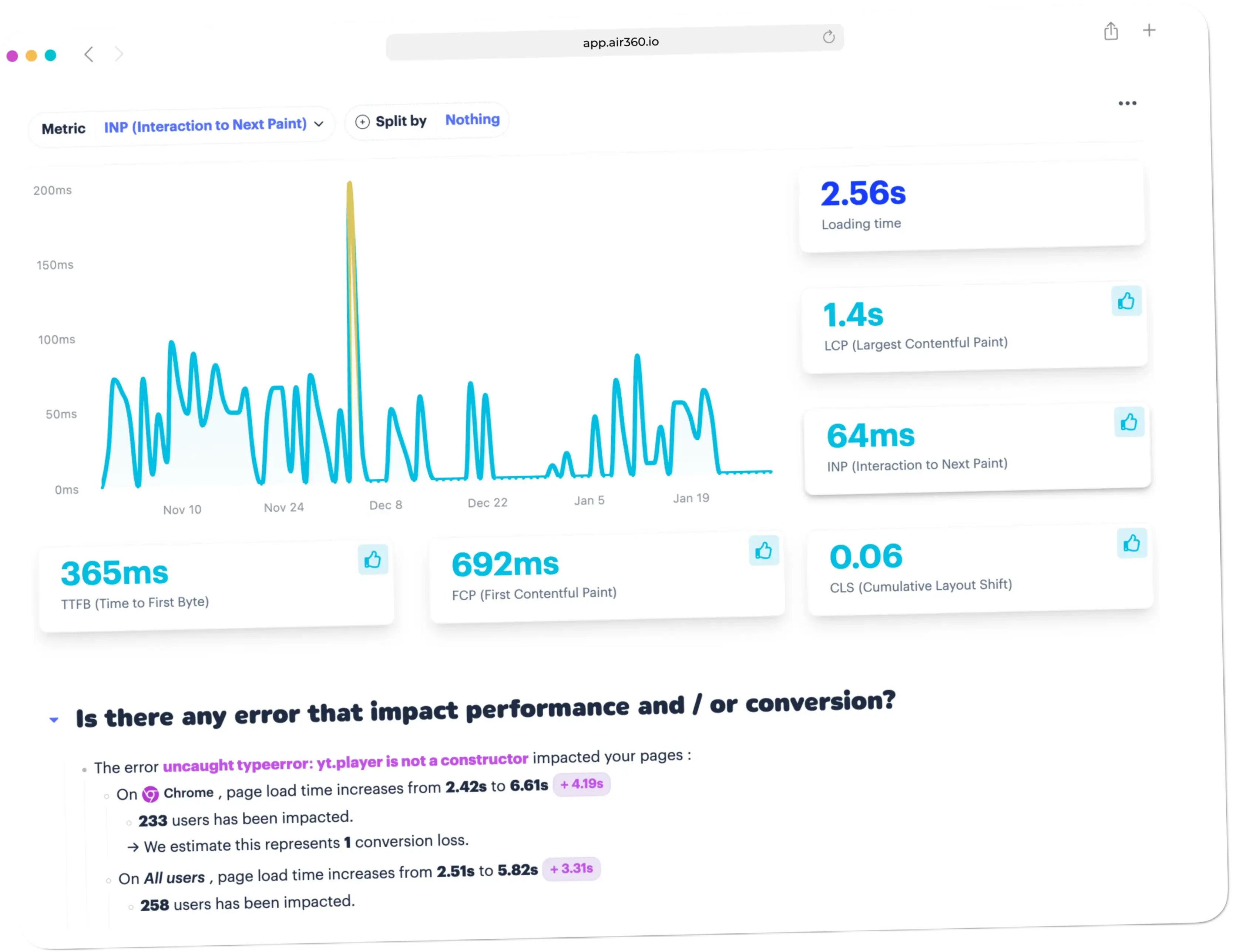
What are Web Vitals and error monitoring?
Core Web Vitals are Google measures of real user experience, loading speed through LCP and FCP, server response through TTFB, responsiveness through INP, and visual stability through CLS. Alongside them Air360 tracks the technical errors your visitors actually encounter, monitored in real time rather than sampled from a synthetic test.
Why monitor them next to behaviour?
Performance data in a separate tool answers a different question from the one you are asking. When conversion falls on a step, what you need to know first is whether those sessions were slow or hitting errors, because that decides whether the fix is engineering or design. Core Web Vitals are also part of how Google assesses pages, so the same work that stops visitors leaving tends to help how the page is judged in search.
What the first week looks like
Look at the pages with traffic first, not the pages with the worst scores. A poor score on a page nobody visits costs nothing, and a mediocre one on your highest-traffic template costs every day. Check the numbers against the devices your visitors actually use rather than a lab result, then confirm with replays that the delay is one people notice. Some slow steps are invisible in practice and some fast ones still feel broken.
Where it fits with the rest
Vitals and errors answer whether the problem is technical. That is worth establishing early, because it is the cheapest explanation to rule in or out. If the step is fast and error-free and people still leave, the answer is in the funnel, the zoning or the replays instead. Running the technical check first stops teams from redesigning a page that was only ever slow.
Everything you need to know
Where teams use this
Sport Companies
Create the best possible online fan experience with Air360, with personalized journeys, smooth ticketing, and optimized fan engagement.
Gaming Companies
Create the best possible online player experience with Air360, with personalized journeys, smooth sign-up and purchase, and optimized player engagement.
E-commerce Companies
Create the best possible online shopping experience with Air360, with personalized journeys, smooth checkout, and optimized customer engagement.
Stop wondering why users leave.
Start knowing.
Join teams who use Air360 to monitor Web Core Vitals and errors, ensuring a fast and reliable user experience. And insight into revenue.